Showing posts with label Movies. Show all posts

Monday, March 14, 2011

Paltrow Pornos: A List

I like "head" and I like "box." Yet the end of "Se7en" doesn't arouse me.
1. Country Schlong

2. Iron Man-Bits

3. Shallow Hole

4. Sky Captain and the World of Fellatio

5. Se7en Inches

6. Shakespeare In Lust

7. The Talented Mr. Winky

8. The Pole-Bearer

9. The Royal Perineums

10. Great Ejaculations


Gwyneth was also in "Duets," "Hard Eight," "Austin Powers in
Goldmember," "Two Lovers" and "Bounce."  But those titles are already
so suffused with innuendo as to be essentially immune to parody.

Wednesday, August 25, 2010

Band Names That Reference Stuff

The band in "Scott Pilgrim vs. The World" is called Sex Bob-omb, which is hilarious.


Here are some more awesome names for bands that are also references to stuff.  


Band names that reference David Cronenberg: Brundle-Fly; Flesh Gun; Viggo Mortensen's Junk


Band names that reference Woody Allen: Vicky Cristina Bossa-Nova; Paul Simon Stole My Girlfriend; Anything Else


Band names that reference Hitchcock: High-Angle Shot; Woman With Glasses; Alfred and the Cool Blondes; Cary Grant and the Crop-Dusters


Band names that reference JRR Tolkien: Council at Rivendell;The Ringwraiths; Smaug's Horde; Viggo Mortensen's Junk


Band names that reference Orson Welles: Deep Focus; F for Funk; The Rosebuds; The Third Men; Frozen Peas


Band names that reference video games: Starman; Falcon Punch; Warp Whistle; Tuesday is Raid Night; Kael'thas and the Setbacks; Spawn More Overlords; Mega-Buster and the Situational Upgrades; Deku Nuts; Day of Lavos; Call of Booty; Splinter Cello

Friday, July 16, 2010

Internal Consistency and Rules

Fantasy and sci-fi need to be grounded by rules.  Precisely because characters in these genres have magical powers and encounter mythical creatures, their abilities need to have clearly defined constraints.  We don't want to feel cheated when characters arbitrarily have new and never-before-seen powers to extricate them from plot problems.

Perhaps the most famous example of this kind of cheating is the movie Superman II, in which Superman had a magic kiss of forgetting.  However, Laurell K. Hamilton's popular Anita Blake series has also been criticized for regularly giving its protagonist new superpowers to get her out of jams.  This stuff isn't good; it's difficult for readers to invest in conflict if they know that the character is probably just going to solve any plot problems that arise by shooting heretofore-unmentioned laserbeams from her fingertips or blowing stuff up with her mind.

"Damn right, I have a magic kiss of forgetting.  I'm friggin' Superman."

We call this deus ex machina, which is Latin for "God from the machine."  The term refers to a convention of classical theater, in which plot problems were resolved by the sudden entrance of a deity into the story.  However, in practice, it refers to any solution to a plot problem that emerges from outside the narrative.  It is, in some ways the inverse of the well-worn rule about Chekov's gun; the rule that a gun hanging above the mantel in Act 1 must go off in Act 3.  It is similarly true that, if you want the character to be packing heat in Act 3, you should establish the gun in Act 1.

Grounding something organically in plot is structurally simple; James Bond swings by the Q-Branch lab at the beginning of the movie, and Q demonstrates some new exploding cufflinks.  Later on, when the villain thinks Bond is disarmed, we realized that Bond is still wearing the cufflinks.  Bond will then proceed to use the cufflinks blow shit up.  We understand where the cufflinks came from, so this is logical.  

Compare and contrast:  There are no cufflinks.  When Bond is captured, he suddenly announces he has magic powers and starts blowing things up using psychokinesis or something.  This is deus ex machina.  

Vampire fiction has a long and dubious history of bending its own rules and loopholing its central premises.  Vampires are sexy and readers love them, but their pesky problems with daylight and their inconvenient need to drink blood all the time makes it hard to write plots about how they are glamorous bad-boy romantic heroes with awesome superpowers and no drawbacks at all, whatsoever.

Twilight gets bashed a lot for its blasphemous sparkles, but beloved Buffy the Vampire Slayer struggled with similar problems, and the Buffy writers were fond of ridiculous, illogical solutions. Vampires could buy blood at the supermarket in takeout soup containers.  Every building in Sunnydale was connected by convenient, easily-accessed sewers, so vampires could get around during the day.  Failing that, they could run around with blankets over their heads.

"I could never love you, Spike.  You smell like doody."

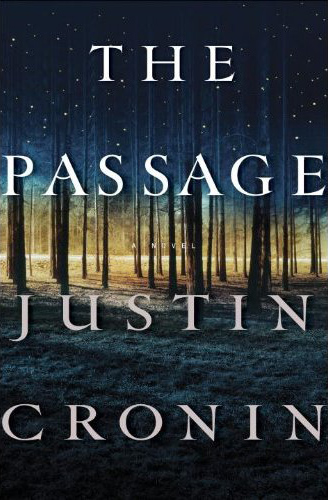
After the jump, more spoilery stuff about Justin Cronin's The Passage.  

Tuesday, July 6, 2010

Want to write? Start reading.

You have to read. A lot. And you have to read good books.

You should read a lot before you ever start writing. Reading is how you learn what a good sentence feels like. Reading helps you develop your command of the finer points of grammar and syntax. Reading improves your vocabulary. 

Reading is also the best way to learn about plot and structure. If you don't know where to begin and to end, you need to read, to learn the shape of a story. Movies can also help you with learning about narrative structure, since they compress the whole enterprise into about two hours. Watch, in particular, how they open and how they introduce characters.  The wedding scene in "The Godfather" and the montage introducing the gang in "Ocean's Eleven" are remarkably cool and efficient examples of how to introduce a large cast quickly, without resorting to excessive exposition.  If you want to learn how to establish characters, those movies are a good place to start.


"We have three minutes to introduce nine characters.  Are you in, or are you out?"

You can also learn a lot from watching TV, if you watch the good shows and pay attention to plotting and structure.  Television's narrative objective is to sustain narrative tension and viewer interest while moving the plot slowly. In a novel, things happen faster, and maintaining a status quo is less of an underlying objective, but tension remains important.  You can learn some good story tricks from serialized dramas like "Lost" and "Mad Men."

Reading will also help make things like dialog and description second nature.  Dialog that works on the page is a little different from the way people actually talk, but it feels natural. And many things people say, the pleasantries and small talk, are excluded on the page. If your dialog is clunky or awkward you need to read more, to learn how to write it.   Description should be evocative without getting purple or taking up too much space.  The best way to learn how to do these things is to see them done well.

If you aren't well-read, you are probably working with an incomplete toolbox.